Do you need the operation at all?
Settle this before you compare hospitals: not every prostate cancer needs surgery. For low-risk cancer, the European Association of Urology (EAU) guideline puts active surveillance first. For intermediate- and high-risk cancer confined to the prostate, surgery and radiotherapy are both established treatments.
A centre that reviews your reports properly will sometimes tell you that you do not need an operation, or not yet. Treat that as a good sign. Be careful with any offer that arrives before someone has looked at your biopsy report, PSA history and MRI.
This article is about robotic radical prostatectomy for cancer. An enlarged prostate without cancer is treated with different operations, such as transurethral resection or laser enucleation, and those are not covered here.
How do you judge the surgeon?
Ask how many robotic prostatectomies the surgeon has performed and who sits at the console for your operation. Experience is the one factor patients can check that has been linked to results in large studies.
| What was measured | Finding | Study |
|---|---|---|
| Positive surgical margin | 26% with 10 previous operations, 21% with 250, 18% with 500 and 14% with 2,000. The curve levelled off at around 500. | Bravi 2024: 13,090 men, 74 surgeons |
| Cancer recurrence (PSA) at 5 years | Free of recurrence: 82.0% with 10 previous operations, 82.7% with 250 and 84.8% with 1,000. The link was not statistically significant. | Bravi 2023: 8,101 men, 46 surgeons |
| Sexual function and early continence | Scores kept improving until about 600 to 800 robotic operations. | Thompson 2014: one surgeon, 1,552 men |
All three studies are observational. The link between experience and recurrence is weaker than the link with margins and function, so a high case number is a reason for confidence, not a guarantee.
The robot itself matters less than the hands. In the randomised Brisbane trial of 326 men, urinary and sexual function 12 weeks after robotic and open surgery were similar, and the authors advised patients to choose an experienced surgeon over a particular technique.
Practical checks: ask for the number of robotic prostatectomies specifically, since a total for all robotic operations is a different figure. Confirm that the named surgeon performs the whole procedure. Look up the surgeon's publications through an ORCID or PubMed record, which cannot be edited by a marketing team. Expect to meet the surgeon in person before the day of surgery.
What should the hospital be able to show?
In Turkey, a hospital that treats international patients must hold a health tourism authorisation from the Ministry of Health. Ask for it. The current regulation was published in the Official Gazette on 26 April 2025 (No. 32882) and applies to hospitals and to the agencies that bring patients to them.
- Authorisation. Hospitals and intermediary agencies may not work in international health tourism without their own certificate.
- Complication insurance. The hospital is required to take out complication insurance for operations performed in an operating theatre.
- Itemised invoice. You are entitled to an invoice that lists the services with their unit prices.
- Your records. On request you receive, free of charge, copies of your laboratory and imaging results and the list of drugs and materials used.
- Language. The hospital's international patient unit is responsible for interpreting.
Beyond the paperwork, a hospital suitable for cancer surgery has an intensive care unit, a blood bank and a pathology service that reports the removed prostate in full. If you were referred by an agency, ask whether you will speak to the surgeon directly before you commit.
What should the offer include?
A usable offer is written, itemised and says what happens if things do not go to plan. Two quotes can differ widely because they cover different things, so compare the contents before the totals.
| Item | What to ask |
|---|---|
| Surgeon, anaesthesia, theatre | Is the named surgeon performing the whole operation? |
| Hospital nights | How many are included, and what does an extra night cost? |
| Tests before surgery | Which are done in Antalya, and which results should you bring? |
| Pathology | Is the full report of the removed prostate included, in English? |
| Catheter and medicines | Are supplies and discharge medicines included? |
| Interpreter and transfers | Who provides them, and on which days? |
| If the plan changes | What happens, and who pays, if you need a longer stay, intensive care or a second procedure? |
| After you leave | How do you reach the surgeon, and are follow-up consultations included? |
No prices are published on this site. The cost of a prostatectomy depends on your clinical situation: whether lymph nodes are removed, previous abdominal surgery, other illnesses that call for extra tests, and the length of stay. At this practice, pricing information for your situation is given in the WhatsApp conversation after your reports have been reviewed.
How long do you need to stay?
Plan for 5 to 7 days in Antalya in total for a robotic prostatectomy. The sequence at this practice is fixed in advance:
- Before you book a flight. Your reports are reviewed and the surgery day is set from your test results.
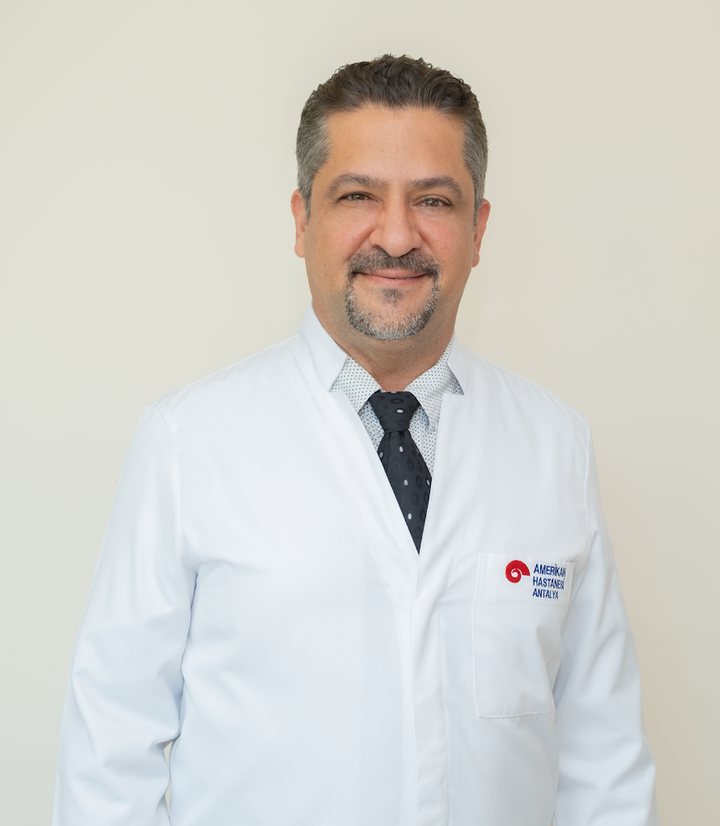
- The day before surgery. You meet Prof. Ateş in person at Antalya American Hospital, have the anaesthesia assessment and sign the consent forms.
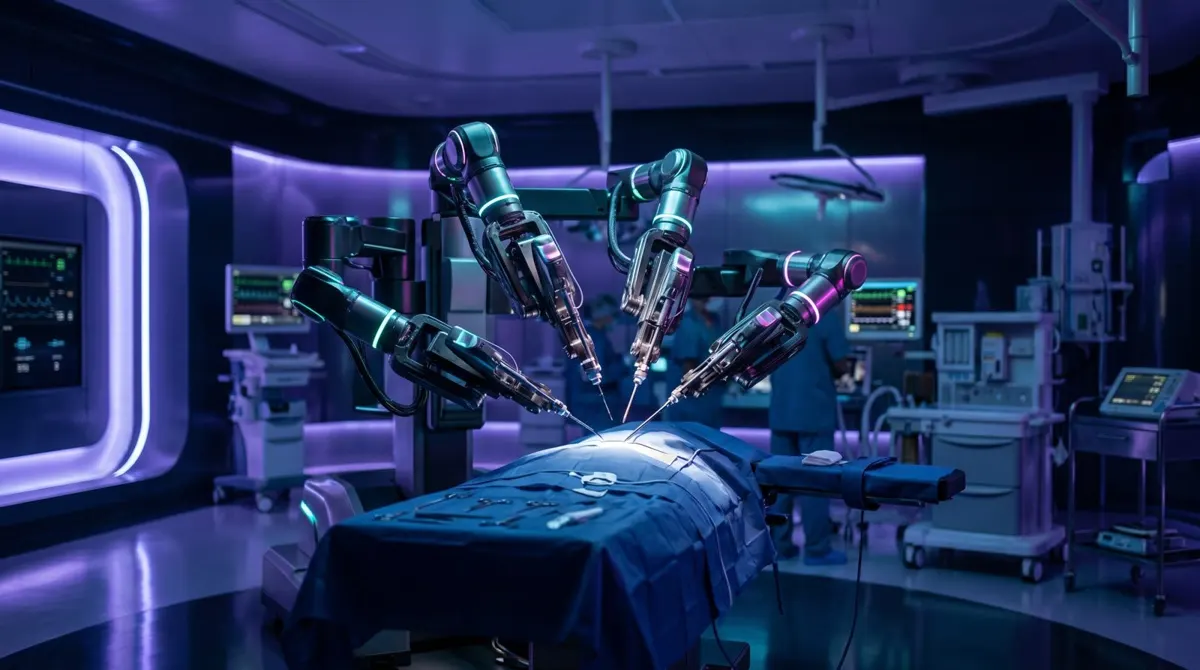
- Surgery. The planned operation takes place the next day with the da Vinci Xi system.
- Day 1 to 3. Walking and eating early, then discharge from hospital.
- Until the flight. Recovery in Antalya. The catheter usually stays for 7 to 10 days, so most patients fly home with it in place.
If the anaesthesia assessment finds a serious condition that was not known or not declared beforehand, the operation may have to be postponed. Your health comes before the schedule, so book flights and accommodation that can be changed.
Is it safe to fly home after a prostatectomy?
Most men can fly within a week, with the catheter in place and with precautions against blood clots. The decision is made individually at discharge, and a medical report for the flight is prepared for you.
Pelvic cancer surgery raises the risk of clots in the leg veins and lungs for several weeks. In a systematic review of 71 studies, the risk of a symptomatic clot within 4 weeks ranged from 0.2 to 0.9% after robotic prostatectomy without lymph node removal, and was considerably higher after open surgery with extended lymph node removal (3.9 to 15.7%). Sitting still on a long flight adds to that risk.
- Walk in the aisle every hour and choose an aisle seat.
- Drink water, and wear compression stockings if they were recommended.
- Take blood-thinning injections exactly as prescribed, if you were given them.
- Carry the flight report, a spare leg bag and your discharge papers in your hand luggage.
- Break a very long journey with a stopover where possible.

Who follows you once you are home?
Arrange this before you travel: a urologist or family doctor at home who agrees to remove the catheter if needed and to order your PSA tests. The UK National Health Service gives the same advice to anyone planning treatment abroad: agree in advance how aftercare and the exchange of records will work.
You should leave Antalya with these documents, in English:
- A discharge summary and the operation note.
- A medical letter for the doctor who will remove the catheter, with the planned date.
- The flight report.
- A PSA schedule. The pathology report of the removed prostate follows when it is ready, and it decides whether any further treatment is discussed.
The first PSA is measured 4 to 6 weeks after surgery and is expected to be very low. It is usually repeated every 3 months in the first year. The most widely used definition of biochemical recurrence is a PSA of 0.2 ng/mL or more confirmed by a second measurement; the EAU guideline describes recurrence as a rising PSA without a fixed threshold. Send each result to your surgeon as well, so that one person sees the whole course.
After the catheter is removed, pelvic floor physiotherapy can contribute greatly to the recovery of urinary control. It is worth booking a physiotherapist at home before you leave. More on recovery, continence and erections is on the prostate cancer page.
When is travelling not a good idea?
When the surgery is not clearly indicated, or when you cannot absorb a delay. Think again in these situations:
- Your cancer is low risk and surveillance has been recommended. Surgery abroad does not change that advice.
- You have serious heart or lung disease, or take blood thinners that need careful management around surgery.
- Nobody at home has agreed to follow you after the operation.
- Your ticket, your job or your budget leaves no room for a longer stay if recovery is slower than planned.
- The offer promises a result. No surgeon can guarantee continence, erections or cure.
Check your insurance as well. Standard travel insurance often excludes planned treatment abroad, so ask the insurer in writing what is covered.
Which questions should you send before you book?
Send them in writing and keep the answers.
- On my reports, do you recommend surgery, and what are my alternatives?
- How many robotic prostatectomies have you performed, and will you perform the whole operation yourself?
- Will lymph nodes be removed, and is nerve sparing planned on one or both sides?
- What does the offer include, and what would be charged in addition?
- What happens, and who pays, if I need to stay longer or need a second procedure?
- Which documents will I receive in English, and when will the pathology report reach me?
- How do I reach you after I am home, and for how long?
This article gives general information and does not replace an assessment of your own scans and results. Treatment is decided individually.