WhatsApp

Urology · da Vinci Xi · 1,000+ robotic operations

Robotic urologic surgery in Antalya, Turkey

Prostate, kidney, bladder and adrenal operations with the da Vinci Xi system, performed by Prof. Dr. Mutlu Ateş at Antalya American Hospital. Send your reports first. Your surgery date is set before you travel, and most trips take 5 to 7 days.

1,000+robotic operations performed by Prof. Dr. Mutlu Ateş

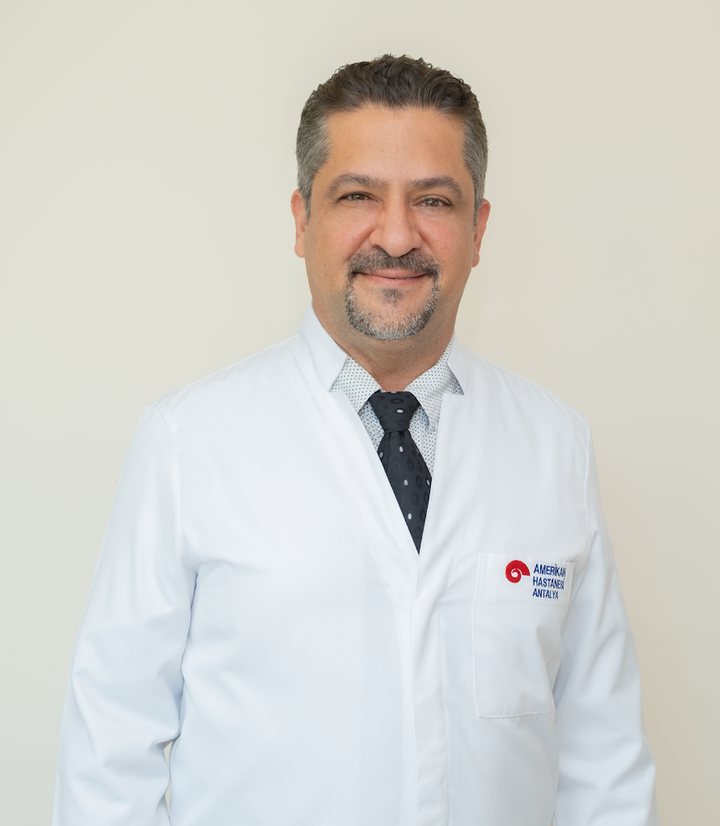
Prof. Dr. Mutlu AteşProf. Dr. Mutlu AteşUrologist, Antalya American HospitalMonday to Saturday, 09:00 to 17:00
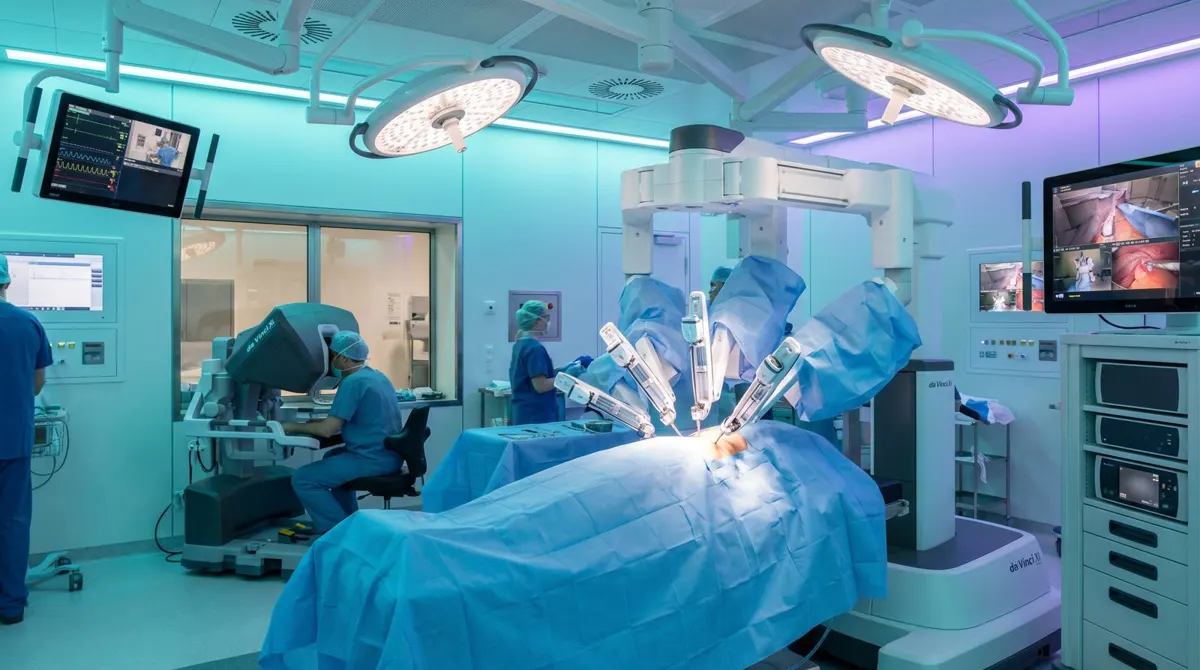
Robotic surgery operating room with the surgeon at the console, representative image
da Vinci Xi3D HD visionWristed instruments
Representative image. Not a real patient or operation.

Four organs, four different reasons to use the robot

Each operation gains something different from robotic assistance. Under each one is the strongest published finding and the kind of study it comes from.

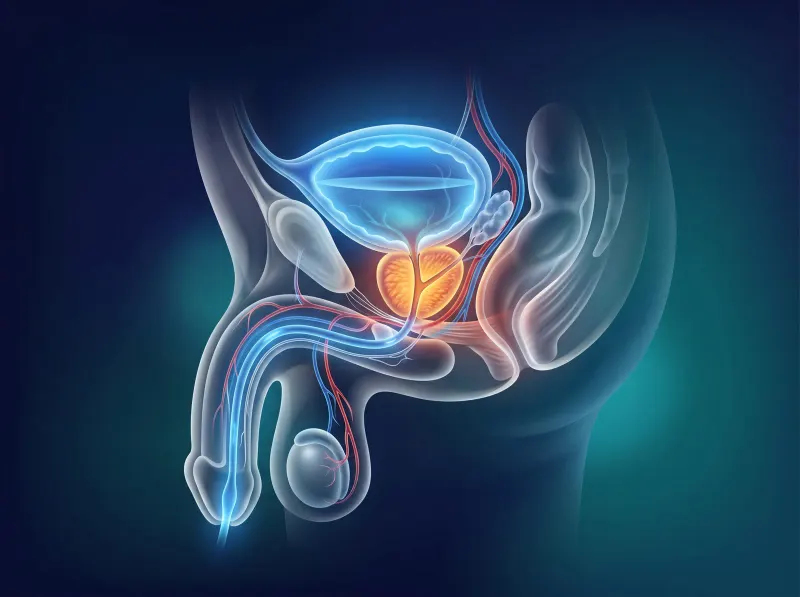
Prostate anatomy illustration
Randomised trials

Robotic radical prostatectomy

Prostate cancer: treatment by risk group

For localised prostate cancer. In the Brisbane randomised trial of 326 men, urinary and sexual function at 12 weeks were similar after robotic and open surgery. In NeuroSAFE PROOF (381 men), nerve sparing guided by frozen section during robotic surgery gave better erectile function scores at 12 months (IIEF-5 12.7 versus 9.7).

How it works

The surgeon operates. The robot steadies and scales.

The system does not act on its own. Every movement of the instruments is made by the surgeon at the console, a few steps from the operating table.

Wristed robotic instruments working under fluorescence imaging, representative image

Wristed instruments, tremor filtering and motion scaling

The instruments bend at the tip like a wrist. The natural tremor of the hand is filtered out, and large hand movements can be scaled down into small instrument movements (for example 3 to 1). This helps most in fine steps such as nerve sparing and suturing deep in the pelvis.

One long incision for open surgery compared with several small port sites for robotic surgery, illustration

Several 8 mm ports in place of one long incision

Instruments and the camera pass through small ports. One port site is enlarged at the end to remove the specimen. Port number and position vary with the operation.

What robotic surgery tends to improve

  • Blood loss. A pooled analysis of 8 randomised cystectomy trials (1,024 patients) found about 328 mL less blood loss and fewer transfusions.
  • Early recovery. Less pain and shorter stays after partial nephrectomy in OpeRa, and fewer adverse events during prostatectomy in the Brisbane trial (2% versus 8%).
  • Precision in confined spaces. Wristed instruments and a magnified 3D view help in the deep pelvis and around kidney vessels.

What it does not change

  • Cancer control. Randomised trials show results comparable to open surgery, not better.
  • Operating time. Robotic operations were longer in several trials (about 84 minutes longer in the cystectomy analysis).
  • The need for the right indication. Some patients are better served by open surgery, another treatment, or active surveillance.

Evidence

The studies behind this page

Every figure on this page comes from one of these publications. Each row also states what the study did not show.

StudyDesignMain findingLimit
YaxleyLancet 2016Randomised, 326 men, prostatectomyUrinary and sexual function similar at 12 weeksSingle centre, early results
NeuroSAFE PROOFLancet Oncol 2025Randomised, 381 menIIEF-5 at 12 months 12.7 versus 9.7 with frozen-section guided nerve sparingTests a technique within robotic surgery, not robot versus open
OpeRaAnn Oncol 2025Randomised, 240 patients, partial nephrectomyLess pain and shorter stay after robotic surgeryComplication difference not significant; longer operating and ischaemia times
RAZORLancet 2018Randomised, 350 patients, cystectomyTwo-year progression-free survival 72.3% versus 71.6%Shows equivalence, not superiority
iROCJAMA 2022Randomised, 338 patients, cystectomy with the diversion built inside the bodyFewer clots (1.9% versus 8.3%) and wound complications (5.6% versus 16%)Days alive and out of hospital differed by two (82 versus 80)
LiuWorld J Surg Oncol 2023Meta-analysis, 8 randomised trials, 1,024 patients328 mL less blood loss, fewer transfusions (odds ratio 0.45)84 minutes longer; complications and quality of life not different
EspositoCancers 2025Robotic versus laparoscopic adrenalectomyOutcomes close between the two approachesHigher cost for robotic surgery
ProtecTNEJM 2023Randomised, 15-year follow-upDeath from prostate cancer 3.1% with monitoring, 2.2% with surgery, 2.9% with radiotherapyMetastases were more frequent with monitoring (9.4% versus 4.7% and 5.0%)

Trial results describe groups of patients. They do not predict the result of an individual operation, which depends on the disease, the patient's health and anatomy.

Man walking by the sea in Antalya, representative image

From your first message to your flight home

The decision about surgery is made on your documents before you travel, so you do not fly to Antalya to find out whether you are a candidate. Most trips take 5 to 7 days in total. Radical cystectomy needs longer and is planned individually.

Before you travel

From home, by WhatsApp or email

  1. 1

    Send your reports

    Pathology report, PSA results, and MRI, CT or PET images with their reports. WhatsApp or email both work.

  2. 2

    Get an assessment

    Prof. Ateş reviews them and tells you whether robotic surgery suits your case, or whether another treatment or surveillance is the better choice. Pricing information for your clinical situation is given in the same WhatsApp conversation.

  3. 3

    Fix the dates

    Your surgery day is set from your test results before you book your flight. For most operations, plan for 5 to 7 days in Antalya in total.

In Antalya

5 to 7 days in total for most operations

  1. 4

    The day before surgery

    You meet Prof. Ateş in person at Antalya American Hospital in Muratpaşa, have your anaesthesia assessment and sign the consent forms.

  2. 5

    Surgery

    The planned operation takes place the next day with the da Vinci Xi system. The surgeon is at the console for the whole procedure.

  3. 6

    Recovery and flight home

    The remaining days are for recovery, first in hospital and then in Antalya, before you fly home. After radical cystectomy the stay is longer and depends on the type of urinary diversion, the course of the operation and your recovery.

If the anaesthesia assessment finds a serious illness or abnormal result that was not known before, or was not mentioned in your medical history, the operation may need to be postponed. Your health comes before the schedule. Please tell us about every illness, operation and medicine when you send your reports.

Prof. Dr. Mutlu Ateş, urologist1,000+ robotic operations

The surgeon

Prof. Dr. Mutlu Ateş

Prof. Dr. Mutlu Ateş is a urologist. He works in robotic radical prostatectomy, robotic kidney and bladder surgery and laparoscopic urology, and sees patients at Antalya American Hospital. He has performed more than 1,000 robotic operations.

His academic record can be checked through his ORCID record, Google Scholar profile and PubMed publication list.

  • 1997Medical degree, Ege University Faculty of Medicine
  • 2004Specialist in urology, Akdeniz University
  • 2005–2006Fellowship on an ESUT scholarship, SLK Klinikum Heilbronn (University of Heidelberg), with Prof. Dr. Jens Rassweiler
  • 2012Associate professor of urology
  • 2020Professor of urology, University of Health Sciences, Antalya Training and Research Hospital
  • 2021Robotic bilateral partial adrenalectomy, World Journal of Urology
  • 2026Antalya American Hospital

Questions

Before you decide

Is robotic surgery better than open surgery?

Not in every respect. Randomised trials show cancer control comparable to open surgery: in RAZOR, two-year progression-free survival after cystectomy was 72.3% with robotic and 71.6% with open surgery. The measurable gains are less blood loss and an easier early recovery, at the cost of a longer operation. The right indication and the experience of the surgeon matter more than the platform. Prof. Dr. Mutlu Ateş has performed more than 1,000 robotic operations.

Does the robot operate by itself?

No. The da Vinci Xi has no autonomous function. The surgeon sits at a console in the operating room and controls every movement of the camera and the instruments. The system filters hand tremor and scales movements. It does not make decisions.

Does every prostate cancer need surgery?

No. In the ProtecT trial, death from prostate cancer after 15 years was low in all three groups: 3.1% with active monitoring, 2.2% with surgery and 2.9% with radiotherapy. Metastases were more frequent with monitoring (9.4%). For low-risk disease, active surveillance is often the first option. This is assessed from your pathology and PSA before any operation is planned.

Which documents should I send for an opinion?

Your pathology report (biopsy or previous surgery), PSA results with their dates, imaging reports and, where possible, the images themselves (multiparametric MRI, CT, PET), a list of your medicines, and a short summary of other illnesses and previous operations.

How long do I need to stay in Antalya?

For most operations, plan for 5 to 7 days in total. You arrive the day before surgery for a face-to-face consultation, the anaesthesia assessment and the consent forms, and the planned operation takes place the next day. The remaining days are for recovery before your flight home. Radical cystectomy is a larger operation: the length of stay depends on the type of urinary diversion, the course of the operation and your recovery afterwards, so no fixed number of days is given in advance.

Can the operation be postponed after I arrive?

Yes, if it is safer for you. The anaesthesia assessment on the day before surgery may find a serious illness or abnormal result that was not known before, or was not mentioned in your medical history. In that case the operation may need to be postponed until it has been assessed and treated. Your health comes before the schedule, so please list every illness, previous operation and medicine when you send your reports.

How much does robotic surgery cost?

The cost depends on your diagnosis, the operation that is planned and your general health, so a single figure on a website would not be accurate for you. Send your reports on WhatsApp and you will receive pricing information for your clinical situation, together with the assessment of your case.

Can I get a second opinion without travelling?

Yes. An opinion on whether surgery is indicated, and by which approach, can be given from your documents, and a surgery date can be set from your test results. You meet the surgeon in person the day before the operation.

Contact

Start with your reports

Send your pathology report, PSA results and imaging. You will be told whether robotic surgery is an option for you, what the next step would be, and what it would cost in your clinical situation.

WhatsApp
+90 547 211 07 07
Email
info@antalyarobotikcerrahi.com
Address
Antalya American Hospital (Antalya Amerikan Hastanesi), Çaybaşı Mah. 1352. Sk. No:8, 07100 Muratpaşa, Antalya, Turkey
Hours
Monday to Saturday 09:00 to 17:00 (GMT+3). Closed on Sunday.
Airport
Antalya Airport (AYT)